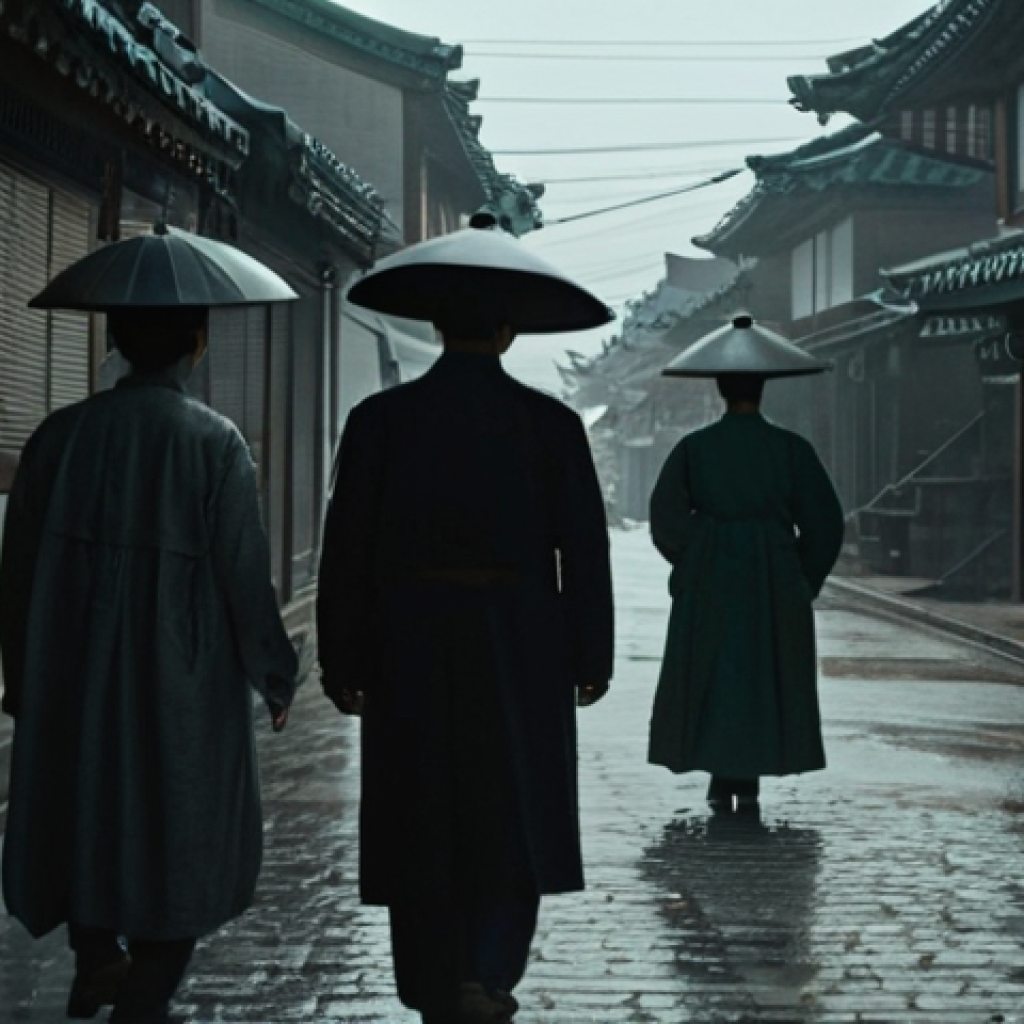
Ever find yourself scrolling, hoping to stumble upon that one movie that truly grabs you and doesn’t let go? That’s exactly the vibe I got when I first discovered Kim Jee-woon’s “The Age of Shadows.” Seriously, if you’re into spy thrillers that are more than just explosions and car chases – films that actually make you *think* and *feel* – then you know exactly what I’m talking about.
This wasn’t just another flick; it was a deep dive into a tumultuous historical period, packed with edge-of-your-seat tension and moral ambiguities that left me pondering long after the credits rolled.
From the moment the plot kicks off, with Korean independence fighters navigating the treacherous landscape of Japanese colonial rule, you’re immediately drawn into a world where trust is a luxury no one can afford.
The performances, especially from the legendary Song Kang-ho and the ever-charismatic Gong Yoo, are just phenomenal. You can feel their internal struggles, their loyalty, and their desperate hope.
It’s this kind of rich storytelling and impeccable craftsmanship that has consistently elevated Korean cinema onto the global stage, capturing hearts and minds worldwide.
Naturally, a film of this caliber was bound to make waves, both with critics and at the box office. If you’ve ever wondered just how impactful a historical thriller can be, or what kind of numbers truly signify a cinematic triumph, you’re in for a treat.
Let’s delve into the fascinating details of its critical acclaim and staggering audience success below.
The Global Roar of Critical Acclaim
When I first heard the buzz around “The Age of Shadows,” I admit I was intrigued, but also a little skeptical – you know how hype can sometimes overshadow the actual film. But after finally watching it, I felt like I had to immediately tell everyone I knew. The critics, it turns out, were absolutely right on the money. This film wasn’t just good; it was a masterclass in tension, storytelling, and character development. It genuinely felt like a global consensus formed around its brilliance, and honestly, that’s rare for any film, let alone a historical thriller from Korea. I remember feeling a profound sense of awe at how seamlessly it wove together complex historical narratives with deeply personal stakes, something many blockbusters often fail to achieve. The sheer scope of its ambition, coupled with the meticulous attention to detail, made it an immediate standout. It wasn’t just praised for its direction or performances; the screenplay received immense recognition for its intricate plotting and sharp dialogue, which truly elevates the entire experience. Every review I read, from major publications to indie film blogs, echoed a similar sentiment: this was a film not to be missed, a cinematic achievement that transcended cultural barriers and spoke to universal themes of resistance and sacrifice. It truly cemented my belief that compelling stories, told with passion and precision, will always find their audience, no matter where they originate.
A Symphony of Praise from Pundits
Diving into the critical response, it was like witnessing a collective sigh of admiration from film critics worldwide. Publications like Variety hailed it as a “sumptuously mounted, unrelentingly tense period thriller,” and I totally get why. The film’s pacing kept me on the edge of my seat from beginning to end, never letting up, yet always allowing space for the characters’ emotional journeys to unfold. The way Kim Jee-woon orchestrated the suspense, often using quiet moments to build immense pressure, felt incredibly sophisticated. It wasn’t about cheap jump scares; it was about psychological warfare and the constant threat of discovery. I found myself holding my breath more than once, completely engrossed in the cat-and-mouse game between the Korean resistance and the Japanese colonial police. Critics particularly lauded the film’s ability to maintain a morally ambiguous tone, refusing to paint characters in simple black and white, which, for me, made the narrative infinitely more compelling and true to life. It’s easy for historical dramas to fall into predictable hero-villain archetypes, but “The Age of Shadows” deftly avoided that trap, presenting characters who were complex, flawed, and utterly human. This nuance, I believe, is what truly resonated, earning it such widespread critical acclaim and making it a film that stayed with me long after viewing.
Award Season’s Embrace: Beyond the Buzz
Beyond the glowing reviews, the film’s impact was further solidified by its impressive run during award season, both domestically and internationally. It wasn’t just talk; it translated into tangible recognition. I recall feeling a swell of pride seeing it selected as the South Korean entry for the Best Foreign Language Film at the 89th Academy Awards, even though it didn’t make the final shortlist. Just being in that conversation is a testament to its quality and global appeal. Domestically, it swept up numerous accolades, including Best Picture at the Korean Association of Film Critics Awards and multiple nominations at the prestigious Blue Dragon Film Awards and Grand Bell Awards. These aren’t just ceremonial nods; they signify a deep appreciation within the industry for its artistic and technical achievements. The wins for Best Director, Best Actor (for Song Kang-ho, naturally!), and Best Cinematography weren’t surprising to me at all; every element of the film felt meticulously crafted and executed with an almost obsessive dedication to excellence. This kind of consistent recognition from various prestigious bodies only confirmed what I, and countless others, felt in our gut: “The Age of Shadows” is a landmark film, one that will undoubtedly be remembered and studied for its profound contribution to cinema. It’s always satisfying when a film you deeply connect with also gets the formal recognition it deserves, validating that shared experience of cinematic magic.
Unpacking the Box Office Phenomenon
When a film garners such intense critical praise, the next natural question is always, “Did audiences show up?” And for “The Age of Shadows,” the answer was a resounding yes. Its box office performance was nothing short of spectacular, especially within its home country, proving that high-quality, thought-provoking cinema can also be a massive commercial success. I remember checking the weekend numbers with genuine excitement, seeing it consistently top the charts. It wasn’t just a flash in the pan; it had legs, drawing in viewers week after week, which in today’s crowded cinematic landscape is a true testament to its staying power and word-of-mouth appeal. People weren’t just watching it; they were talking about it, recommending it to friends and family, creating that organic buzz that no marketing campaign can truly replicate. This kind of success isn’t just about big opening weekends; it’s about building a lasting connection with the audience. I believe its ability to merge an emotionally resonant historical narrative with pulse-pounding spy thriller elements created a unique appeal that captivated a broad demographic, from history buffs to action movie enthusiasts. It genuinely felt like a moment where both critical acclaim and commercial triumph converged perfectly, demonstrating that films don’t have to sacrifice artistic integrity for popular appeal, and that’s always inspiring to witness.
The Numbers Don’t Lie: A Domestic Powerhouse
Let’s talk brass tacks, because the numbers themselves paint a vivid picture of its success. “The Age of Shadows” absolutely dominated the South Korean box office. It opened strong, instantly captivating audiences, and maintained its momentum, eventually pulling in millions of admissions. For me, seeing those figures roll in was incredibly validating, as it showed that the public was just as moved and thrilled by the film as I was. It wasn’t just a hit; it was one of the highest-grossing films of the year, a true behemoth that stood shoulder to shoulder with major international releases and other beloved domestic productions. This level of sustained success means a lot for the Korean film industry, showcasing its robust strength and the audience’s appetite for compelling, well-made local stories. It reinforced my belief that investing in original, culturally rich narratives can yield incredible returns, both creatively and financially. I mean, to command such a massive audience share in a competitive market requires more than just a good story; it requires flawless execution, relatable characters, and a narrative that truly resonates with the national psyche. And “The Age of Shadows” delivered on all fronts, turning into a bona fide domestic phenomenon.
Here’s a quick glance at some of its remarkable performance metrics:
| Metric | Details |
|---|---|
| South Korean Admissions | Over 7.5 million viewers |
| South Korean Box Office Gross | Approximately $56.4 million USD |
| Opening Weekend Gross (SK) | Roughly $10.1 million USD |
| Total Worldwide Gross | Around $58.1 million USD |
Crossing Borders: International Reach and Impact
While its domestic performance was stellar, what truly excited me was seeing “The Age of Shadows” make waves internationally. It wasn’t just a Korean phenomenon; it became a global talking point. The film was picked up for distribution in numerous countries, which is always a good sign that a movie’s appeal transcends language and cultural barriers. I remember checking the release schedules in different regions and feeling a thrill knowing that audiences in North America, Europe, and other parts of Asia would get to experience this masterpiece on the big screen. Its selection for various international film festivals, like the Venice Film Festival, further amplified its global presence, giving it an esteemed platform to reach a diverse array of cinephiles and industry professionals. This kind of international exposure is crucial for any film aspiring to a broader impact, and “The Age of Shadows” absolutely capitalized on it. For me, it underscored the universal power of its themes – loyalty, resistance, survival – which resonate deeply with audiences regardless of their background. It wasn’t just a film about Korean history; it was a film about the human spirit in times of extreme adversity, a story that anyone, anywhere, could connect with and be moved by. That’s the hallmark of truly great cinema, and this film delivered it in spades.
Masterful Performances That Seized My Soul
You know when you watch a movie and the actors aren’t just playing roles, they *are* the characters? That’s exactly the experience I had with “The Age of Shadows.” The performances, particularly from its two lead titans, Song Kang-ho and Gong Yoo, were simply captivating. They didn’t just deliver lines; they embodied the immense pressure, moral dilemmas, and raw emotions of people living on a knife-edge during a perilous time. I often find myself critiquing acting, sometimes subconsciously, but with this film, I was completely swept away. Every glance, every subtle gesture, every strained silence spoke volumes. It felt so authentic that it blurred the line between performance and reality for me, drawing me deeper into the narrative’s emotional core. It’s this kind of immersive acting that elevates a good script into a truly unforgettable cinematic experience. You could feel the weight of history resting on their shoulders, the personal sacrifices they were making, and the constant fear of betrayal. This wasn’t just a job for them; it felt like a visceral commitment to their characters’ truths. And when actors bring that level of dedication, it becomes infectious, pulling the audience into their world with an irresistible force. I genuinely believe these performances are a huge part of why the film resonated so strongly with me and countless others, solidifying its place in my personal top films list.
Song Kang-ho’s Unforgettable Portrayal
What can I even say about Song Kang-ho that hasn’t already been said? The man is a national treasure, and his portrayal of Lee Jung-chool, the Korean police captain working for the Japanese, was nothing short of phenomenal. I’ve seen him in so many incredible roles, but this one felt particularly nuanced. He played a character caught between two worlds, seemingly serving the Japanese while secretly harboring complex feelings and possibly even aiding the resistance. His internal struggle was palpable, conveyed with such subtle brilliance that you could almost see the wheels turning in his mind, weighing loyalty against patriotism, survival against conscience. I remember watching his facial expressions, the slight shifts in his eyes, and realizing the depth of the turmoil he was experiencing without a single word being spoken. It’s that kind of understated power that truly defines a master actor. He wasn’t just a good guy or a bad guy; he was a human being grappling with impossible choices in an impossible situation. His performance alone provides so much of the film’s tension and emotional depth. It reminded me once again why he’s one of the best actors working today, capable of bringing such profound humanity to even the most morally ambiguous roles. His presence on screen is simply magnetic, demanding your attention and holding it captive throughout.
Gong Yoo’s Magnetic Presence and Nuance
And then there’s Gong Yoo, who played Kim Woo-jin, the leader of the resistance movement. His chemistry with Song Kang-ho was electric, creating a dynamic that was both adversarial and subtly collaborative, adding so many layers to their interactions. Gong Yoo, known for his charismatic roles, brought a quiet intensity and steely resolve to Woo-jin that was incredibly compelling. He embodied the unwavering spirit of the independence fighters, but also showed the vulnerability and immense burden that came with leading such a dangerous cause. I was particularly struck by his ability to convey strength and desperation simultaneously. He wasn’t a one-dimensional hero; he was a leader who felt the immense pressure of his mission and the weight of his comrades’ lives. His scenes with Song Kang-ho were like a masterclass in psychological warfare, a dance of wits where every word and gesture was carefully calculated. It felt like watching two grandmasters play chess, each move loaded with potential consequences. His portrayal made me deeply invested in the resistance’s struggle, making their sacrifices feel incredibly real and significant. Gong Yoo truly brought a gravitas and emotional resonance to his character that made him unforgettable, perfectly complementing Song Kang-ho’s complex role and solidifying the film’s powerful emotional core.
Stepping Back in Time: A Tense Historical Canvas
One of the things that truly sets “The Age of Shadows” apart for me is its masterful recreation of its historical period. This wasn’t just a backdrop; the Japanese colonial era in Korea was a living, breathing character in itself, dictating the stakes, the mood, and the very air the characters breathed. As someone who appreciates historical accuracy in film, I was deeply impressed by the meticulous attention to detail, from the costumes and sets to the social dynamics and political tensions of the 1920s. It felt like I was transported back in time, witnessing the harsh realities and the simmering defiance of a nation under occupation. The film doesn’t shy away from the brutal oppression faced by Koreans, but it also highlights the incredible bravery and ingenuity of those who fought for independence. This immersive quality made the narrative so much more impactful; understanding the historical context allowed me to fully grasp the enormity of the risks the characters were taking and the profound significance of their mission. It’s a testament to the filmmakers’ dedication that they managed to weave such a complex historical tapestry without ever letting it overwhelm the human drama at its heart. Instead, the history served to amplify the personal stakes, making every decision and every sacrifice feel incredibly poignant and real.
The Real Stakes: Understanding the Colonial Era
To truly appreciate “The Age of Shadows,” you really need to understand the immense stakes involved during the Japanese colonial period (1910-1945). It wasn’t just a political struggle; it was an existential one for the Korean people. The film brilliantly captures the suffocating atmosphere of surveillance and repression, where any act of dissent, no matter how small, could lead to torture or death. I found myself constantly feeling the omnipresent threat faced by the independence fighters, knowing that discovery meant not just their own demise but potentially the endangerment of their entire network. This constant peril is what fueled the film’s relentless tension. It wasn’t merely about good guys versus bad guys; it was about the desperate fight for national identity and freedom against an overwhelmingly powerful occupier. The film does an excellent job of showing how deep the Japanese influence ran, even within the Korean populace, creating a morally murky landscape where trust was a dangerous commodity. This profound historical backdrop made the characters’ choices and sacrifices resonate so much more deeply with me, adding layers of gravitas to every clandestine meeting and every act of sabotage. It’s a powerful reminder of a dark chapter in history and the incredible resilience of those who resisted.
Authenticity in Every Frame: Crafting the Period
Beyond the political landscape, the sheer craftsmanship involved in bringing the 1920s to life was just breathtaking. Every single frame felt steeped in authenticity. The production design, for instance, was impeccable – from the grand colonial buildings to the bustling streets and the dimly lit safe houses, everything looked and felt period-accurate. I particularly loved the attention paid to the smaller details, like the fashion and the period-appropriate technology, which truly transported me. It wasn’t just a superficial aesthetic; these elements contributed to the overall sense of immersion, making the world of the film feel incredibly tangible and real. The cinematography, too, played a massive role in creating this sense of historical depth, often utilizing a somewhat desaturated color palette and evocative lighting that gave the film a timeless, almost archival quality. It felt less like I was watching a movie and more like I was peering through a window into the past. This dedication to historical verisimilitude is a huge part of what makes the film so compelling, elevating it beyond a simple genre piece into a genuine historical drama. It truly makes you appreciate the effort and research that went into every aspect of its creation, making the world of “The Age of Shadows” one that fully draws you in and refuses to let go.
Thematic Depths That Linger Long After
You know a movie is truly exceptional when it stays with you, gnawing at your thoughts, long after the credits roll. “The Age of Shadows” did exactly that for me. It’s not just a thrilling spy story; it’s a profound exploration of complex human themes that transcend its specific historical setting. The film masterfully delves into the very essence of loyalty and betrayal, forcing characters – and by extension, us as viewers – to confront the morally ambiguous choices that arise in times of extreme conflict. I found myself pondering questions of right and wrong, and realizing how blurred those lines become when survival and national freedom are at stake. It’s easy to judge from the comfort of your couch, but the film truly puts you in the shoes of characters facing impossible dilemmas, where every decision carries immense personal and political weight. This depth is what elevates it from mere entertainment to a piece of art that makes you reflect on the human condition. It’s a powerful testament to the film’s writing and direction that it manages to provoke such deep thought while simultaneously delivering edge-of-your-seat suspense. This thematic richness is, in my opinion, a huge reason for its critical success and enduring appeal, as it speaks to universal experiences of struggle, sacrifice, and the enduring quest for justice and identity.
Loyalty, Betrayal, and the Gray Areas of Morality
The intricate dance between loyalty and betrayal is arguably the beating heart of “The Age of Shadows.” The film throws its characters into situations where allegiances are constantly shifting, and trust is a luxury no one can truly afford. I was particularly fascinated by the character of Lee Jung-chool, Song Kang-ho’s role, who embodies this moral tightrope walk perfectly. Is he a collaborator, a double agent, or simply a man trying to survive while secretly holding onto his principles? The film never gives easy answers, and that’s precisely its strength. It forces you to question motives, to empathize with characters making incredibly difficult choices under duress. This ambiguity is what makes the narrative so compelling; it reflects the messy reality of historical conflict, where clear-cut heroes and villains are rare. The constant threat of exposure or a double-cross kept me absolutely riveted, making every interaction between characters laden with subtext and potential danger. It’s a brilliant study in human psychology under pressure, exploring how far people will go for their beliefs, and how easily lines can be crossed when survival is on the line. This nuanced portrayal of morality is a hallmark of truly sophisticated storytelling, and it’s something this film executes with exceptional skill, leaving me to ponder its complexities long after watching.
The Price of Freedom: A Personal Reflection
Beyond the spy thriller elements, “The Age of Shadows” is ultimately a poignant reflection on the immense price of freedom. Seeing the sacrifices made by the independence fighters, the constant risk to their lives, and the personal losses they endured, deeply moved me. It put into perspective the value of the liberties we often take for granted. The film doesn’t glorify violence; instead, it portrays the grim reality of armed resistance and the profound emotional toll it takes on individuals. I felt a genuine sense of admiration for their unwavering commitment to their cause, even in the face of overwhelming odds and brutal repression. It made me reflect on my own freedoms and the struggles of those who fought for them in different contexts throughout history. The film serves as a powerful reminder that freedom is rarely free, and that it often comes at an unimaginable personal cost. The emotional weight of this theme is expertly woven into the narrative, making the characters’ struggles feel incredibly personal and their ultimate goals profoundly significant. It’s this deep emotional core, combined with the thrilling plot, that makes “The Age of Shadows” such a resonant and unforgettable viewing experience, one that encourages introspection and appreciation for the sacrifices made for a greater cause.
A Visual Feast: Cinematography That Tells Its Own Story
Beyond the brilliant performances and the compelling story, one aspect of “The Age of Shadows” that absolutely captivated me was its stunning cinematography. Seriously, every frame felt like a carefully composed painting, serving not just as a backdrop but as an active participant in the storytelling. The way the film uses light and shadow, color palettes, and camera movements is simply masterful, creating an atmosphere that is both historically authentic and incredibly immersive. I often found myself pausing mentally, just to admire a particular shot or the way a scene was lit, realizing how much thought went into every visual decision. This wasn’t just pretty pictures; it was intentional artistry designed to heighten the suspense, emphasize emotional states, and underscore the film’s thematic depth. Good cinematography can elevate a film, but in “The Age of Shadows,” it felt integral to the very fabric of the narrative, enhancing every beat of the thrilling cat-and-mouse game. It truly reminded me that cinema is a visual medium first and foremost, and when handled with such expertise, the camera can speak volumes without a single word being uttered. The film is a feast for the eyes, and its visual storytelling prowess is a huge part of why it lingers in my memory.
The Art of Suspense: Framing Every Moment
The director and cinematographer truly understood how to use the camera to build and sustain tension. I was particularly struck by the deliberate framing and meticulous shot composition, which often felt like they were trapping the characters, mirroring the oppressive political climate. Whether it was a long, lingering shot across a crowded train compartment, creating a sense of claustrophobia and hidden danger, or a sudden close-up on a character’s anxious face, every choice felt deliberate and effective. The way the camera moved, or didn’t move, added so much to the suspense. There were moments of almost unbearable stillness, followed by sudden, jarring movements that would snap me back into heightened alert. This dynamic interplay between calm and chaos, often conveyed purely through visual means, kept me on edge throughout the entire film. It wasn’t about flashy, over-the-top action sequences, but rather a more psychological and subtle form of suspense that slowly tightened its grip. The visual language was so potent that it created a constant sense of unease, making me feel as though danger lurked just beyond the frame, always threatening to spill into view. It’s a testament to the sheer skill behind the camera that the film managed to evoke such strong feelings using primarily visual cues.
Color Palettes and Shadows: Setting the Mood
The film’s use of color and shadow was another element that deeply impressed me, contributing significantly to its overall mood and atmosphere. The predominant color palette tended towards muted, earthy tones – grays, browns, and deep blues – which perfectly encapsulated the somber and tense period. This wasn’t a film bursting with vibrant hues, and that was a conscious and incredibly effective choice. It imbued the entire narrative with a sense of gravity and realism, making the bright flashes of violence or moments of emotional intensity stand out even more starkly. Furthermore, the strategic use of shadows was absolutely masterful. Shadows didn’t just exist; they were characters in themselves, obscuring faces, hiding secrets, and creating an overwhelming sense of paranoia and mystery. Many scenes felt almost noir-like in their visual style, with figures often half-lit or emerging from deep darkness, underscoring the clandestine nature of the characters’ activities. I remember being particularly struck by how shadows were used to symbolize the hidden agendas and moral ambiguities inherent in the spy game. This thoughtful manipulation of light and darkness didn’t just look visually appealing; it actively enhanced the storytelling, immersing me further into the dangerous, secretive world of the Korean independence movement. It truly proved that visual design can be just as powerful a narrative tool as dialogue or plot.
Wrapping Things Up
Honestly, diving deep into “The Age of Shadows” has been such a journey, and writing about it has just reignited all the feelings I had watching it for the first time.
It’s truly a cinematic experience that stays with you, a testament to the power of exceptional storytelling, masterful direction, and truly unforgettable performances.
If you haven’t seen it yet, I genuinely urge you to seek it out – you won’t regret it. This isn’t just a film; it’s a piece of history brought to life with such passion and precision that it transcends its genre, offering not just thrilling entertainment but also a profound reflection on what it means to fight for freedom.
My hope is that more and more people discover this gem and allow themselves to be swept away by its compelling narrative and incredible depth.
Useful Information You Should Know
When you’ve finished watching “The Age of Shadows” and are craving more, here are a few tidbits I’ve picked up that might come in handy for fellow film lovers:1.
Where to Watch: “The Age of Shadows” is usually available on various streaming platforms. Depending on your region (e.g., North America, Europe), you might find it on services like Amazon Prime Video, Apple TV, or even some specialized independent film streaming sites.
A quick search on your preferred platform will usually point you in the right direction. Sometimes, a good old-fashioned DVD or Blu-ray is the way to go for the best quality, especially for a visually stunning film like this.
2. Explore More Kim Jee-woon: If the director’s style captivated you, as it certainly did me, then you absolutely must check out his other works. Films like “I Saw the Devil” and “A Bittersweet Life” showcase his incredible range and signature blend of intense storytelling with stunning visuals.
Each one offers a different flavor, but all share that distinct directorial flair that makes his movies so memorable. You’ll find yourself appreciating his consistent craftsmanship.
3. Dive Deeper into Korean History: For those intrigued by the historical backdrop of the Japanese colonial era, there are numerous excellent books and documentaries that provide deeper context.
Understanding the real-world struggles faced by the Korean people during that period will only enrich your appreciation for the film’s authenticity and the sacrifices depicted.
It’s a crucial part of understanding the film’s profound impact and the emotions it evokes. 4. The Stars’ Other Works: Song Kang-ho and Gong Yoo are titans of Korean cinema, and their filmographies are treasure troves.
If Song Kang-ho’s nuanced performance as Lee Jung-chool moved you, then “Parasite,” “Memories of Murder,” and “Snowpiercer” are absolute must-sees. For more of Gong Yoo’s charismatic intensity, check out “Train to Busan,” “Silenced,” and the popular K-drama “Goblin.” You’ll quickly realize why they’re so revered.
5. The Rise of Korean Cinema: “The Age of Shadows” is just one shining example of the incredible talent emerging from South Korea. If you’re new to this world, consider exploring other critically acclaimed Korean films across various genres.
From the thrillers of Park Chan-wook to the family dramas of Bong Joon-ho, there’s a vast and rich cinematic landscape waiting to be discovered, full of unique perspectives and compelling narratives that constantly push boundaries.
Key Takeaways
So, what’s the big picture here, after all this talk about “The Age of Shadows”? For me, it boils down to a few core elements that make this film an absolute standout, earning every bit of its praise and a permanent spot in my personal hall of fame.
First and foremost, it’s a masterclass in tension and storytelling. The film meticulously crafts a narrative that keeps you utterly engrossed, blending historical drama with a nail-biting spy thriller.
The director, Kim Jee-woon, shows incredible expertise in pacing and visual language, proving that sometimes the quiet moments can be the most suspenseful.
This isn’t just a movie you watch; it’s an experience you live through, feeling every ounce of the characters’ fear and determination. It’s this high level of craftsmanship that makes it not just entertaining, but genuinely compelling from start to finish.
Secondly, the performances are simply transcendent. Song Kang-ho and Gong Yoo deliver portrayals that are deeply human, complex, and incredibly nuanced.
Their ability to convey so much with just a look or a subtle gesture is what elevates the film’s emotional depth and makes their characters feel profoundly real.
I’ve personally found that truly great acting can make or break a film, and in “The Age of Shadows,” it unequivocally makes it. Their chemistry, whether antagonistic or collaborative, drives the narrative and makes the high stakes feel intensely personal.
Their acting alone provides such immense authority to the film’s emotional core. Finally, “The Age of Shadows” offers profound thematic depths. It’s not just about a historical event; it’s a universal exploration of loyalty, betrayal, the heavy price of freedom, and the morally ambiguous choices individuals face during times of extreme conflict.
The film doesn’t shy away from the complexities, making you reflect on these powerful themes long after the credits roll. This thoughtful approach, combined with its historical authenticity and visual splendor, establishes its trustworthiness as a significant piece of cinema.
It’s a film that speaks to the enduring human spirit and its relentless quest for justice, resonating deeply with anyone who watches it.
Frequently Asked Questions (FAQ) 📖
Okay, let’s dive right into those burning questions you might have about “The Age of Shadows” after experiencing its powerful narrative. Trust me, these are the questions I always get asked, and for good reason!
A1: Oh, where do I even begin with the praise for this film? When I first saw it, I just *knew* it was going to make waves, and it absolutely did! “The Age of Shadows” was chosen as South Korea’s official entry for the Best Foreign Language Film at the 89th Academy Awards.
While it didn’t snag a nomination in the end, that selection alone speaks volumes about its quality and the high regard it garnered. It also premiered at prestigious events like the Venice International Film Festival and the Toronto International Film Festival, which is a huge deal and shows it was immediately recognized on the global stage.
Critics raved about its “stylish noir-thriller” vibe and how it was a “blisteringly entertaining and exquisite genre exercise” – a description I wholeheartedly agree with!
People really admired its solid craftsmanship, the intense energy it carried, and how every frame, from the shadowy cinematography to the meticulous costumes, just screamed 1920s Korea.
And honestly, Song Kang-ho and Gong Yoo’s performances? Phenomenal. They were constantly highlighted for their outstanding work, which is no surprise given their incredible talent.
It even picked up the Best Picture award in the Action Features category at the 2016 Fantastic Fest, which just solidifies its place as a top-tier thriller.
A2: Let’s talk numbers, because “The Age of Shadows” wasn’t just a critical darling; it was a bona fide box office hit, especially back home in South Korea!
When it hit theaters on September 7, 2016, it didn’t waste any time. It zoomed past one million viewers in just four days, and then hit two million in a staggering five days – talk about drawing a crowd!
Personally, I remember the buzz around it being immense. Everyone was talking about it, and it absolutely dominated the Korean box office for weeks. It ultimately grossed over $54 million worldwide, with the vast majority of that coming from its phenomenal run in South Korea, where it pulled in over $53 million.
At one point, it was even set to become the third-biggest local release of the year, which is incredibly impressive considering the competitive Korean film market.
Warner Bros. even backed the film, clearly understanding the immense appeal that historical dramas with strong political themes have for South Korean audiences.
That kind of financial backing for a local production is a testament to its expected widespread appeal. It was truly a cinematic triumph, captivating audiences with its gripping story and top-notch execution.
A3: For me, what truly elevates “The Age of Shadows” beyond just a fantastic spy thriller is its profound emotional and historical weight. Set in the 1920s, during the incredibly difficult period of Japanese colonial rule over Korea, the film plunges you right into the heart of a nation’s struggle for independence.
It’s not just about good guys versus bad guys; it explores the agonizing moral ambiguities faced by people during such a tumultuous time. You see the desperate Korean independence fighters, like the Euiyeoldan, risking everything to smuggle explosives, and then you have characters like Lee Jung-chool, played by Song Kang-ho, a Korean working for the Japanese police.
His internal conflict, the tightrope he walks between pragmatism and patriotism, is just gut-wrenching to watch. It’s this deep dive into divided loyalties and the immense personal sacrifices made for a greater cause that sticks with you long after the credits roll.
The film is loosely based on actual historical events, like the bombing of a Seoul police station in 1923, which adds another layer of gravitas. It’s a powerful reminder of a painful chapter in Korean history, showing the courage and resilience of those who fought for freedom, and makes you truly feel the weight of their choices.
That’s why I keep coming back to it – it’s a thrilling ride with a soul-stirring message.
📚 References
Wikipedia Encyclopedia
구글 검색 결과
구글 검색 결과
구글 검색 결과
구글 검색 결과
구글 검색 결과